Copyright The Design Chaser 2012. Powered by Blogger.

Search Bar

Social Media

Text Space

THE DESIGN CHASER

PAREIL Revives a Traditional Bastide in the South of France

3.10.2026

In the foothills of the hilltop village of Tourtour in France’s Var region, a traditional Provençal bastide has been carefully reimagined by the architecture studio PAREIL. The project marks the practice’s latest work focused on historic buildings, following its noted renovation of Mas Baudran.


Commissioned by London-based owners seeking a relaxed family retreat in the south of France, the project involved a complete renovation of the existing buildings alongside a comprehensive redesign of the surrounding landscape. PAREIL — established in 2023 between Paris and Marseille — oversaw both the design and the site supervision, with a transformation that remains anchored in the region’s architectural traditions.


The property sits within a layered hillside landscape typical of rural Provence. At its centre is a stone bastide serving as the main house, accompanied by an outbuilding connected by a porch that now functions as a studio, and a small dovecote that incorporates a garage. Like many vernacular structures of the region, the house was originally designed with climate in mind. Thick stone walls provide thermal inertia with volumes and orientation adapted to the Mediterranean climate, while the northern façade is partially embedded into the rock, shielding the building from prevailing winds.


While much of the exterior had been altered in the late twentieth century, including the addition of terraces and a swimming pool, the project involved reshaping the terrain and terraces to adapt to the steep site. Inside, the architects reorganised the layout to restore a coherent functional flow, introducing a balance between generous communal areas and more intimate rooms suited to everyday living. The aim was to enhance the home’s original character, creating a timeless, elegant holiday atmosphere.


Though the renovation involved significant structural work, the interventions remain discrete. Traditional materials — including stone, terracotta, lime plaster and local woods — are used throughout, reinforcing a sense of continuity between the architecture, the surrounding landscape and contemporary use. Passive ventilation systems, underfloor heating and biosourced insulation were also integrated to improve environmental performance without disrupting the character of the house.


The landscape design forms an equally important part of the project. Working with Studio Nolet and Sigmap Jardin, the architects reworked the property’s stepped agricultural terraces — known locally as restanques — reorganising the terrain to respond to the steep site. Upper and lower terraces were redesigned and extended, establishing a more cohesive relationship between the house, the garden and the wider landscape.


Founded in 2023 by Caroline Weill and Laetitia Paradis, PAREIL’s approach sees them anchor themselves in both an environment and human context. This has led to them developing a unique and sensitive architectural signature. Their aesthetic combines the simple and appropriate use of materials, elegant details, and the celebration of regional and artisanal expertise.

That approach is evident here. Rather than imposing a new identity on the house, the architects have worked with its inherent qualities — its orientation, materiality and relationship to the land— allowing the bastide to evolve while remaining firmly rooted in its Provençal setting. The result is a home that feels both inviting and deeply connected to place: a timeless retreat shaped as much by landscape as by architecture.


Credits

Achitecture: PAREIL (in collaboration with Studio Nolet)
Landscape designer: Sigmap Jardin
Landscaping: Auffray Paysage

VIEW STORY
Pin ThisShare on Tumblr

Ashley Botten Design Revives a Historic Toronto Home

5.24.2024

Founded in Toronto by Ashley Botten, abd is renowned for its experiential interiors, outdoor environments, and artful accessories and furniture. The studio showcases a deeply refined appreciation for quality and artistry, employing a unique curated approach. This is evident in Uptown Georgian, an interior renovation that seamlessly infuses heritage architecture with modern living.


Home to a family of six, this Georgian-style residence in Toronto was recently expanded to include an extended kitchen and a primary bedroom with an ensuite bath on the second floor. The clients wanted to preserve original details, such as elegant crown molding, Cremone bolts, and French doors, while introducing a new layer of contemporary expression. With four grown children and two dogs, they also needed the house to be easy to live in and maintain.


The interior emphasises the experience of space and features an earthy palette of white and brown marble, grey limestone, raw copper, and the quiet softness of smoked white oak on the floors and built-in cabinetry. Abd paid close attention to blending its custom furniture designs with new additions and the clients' existing pieces. In the dining area, the family's vintage Eero Saarinen tulip chairs are now paired with a complementary oval dining table by Yabu Pushelberg. In the living room, an abd-designed limestone mantelpiece echoes the geometry of the room's traditional door casings and moldings.


One of the boldest expressions of old meeting new is in the deep entryway leading from the formal front rooms to the newly expanded kitchen and adjoining family room. This unique transitional space is now clad in live copper on all sides, with a slightly protruding edge providing a minimalist framework.


On the second floor, the warm palette continues in the primary bedroom, walk-in closet, bathroom, and office. The finishing details are subtle, quietly woven into the visual rhythm of the house. Rather than matching hardware, door pulls, knobs, and hinges are a mix of shapes and warm metals. Abd's own T-bar in polished brass features on one set of dresser drawers, contrasting with the linear finger pulls chosen for another custom sideboard. This intentional inconsistency gives the home a timeless ambiance that transcends trends. The aim is for every element of the house to be enjoyed in the present and also last a lifetime.


Credits

Design team: Ashley Botten, Quinn Baleja
Builder: Severn Woods
Photography: Patrick Biller

VIEW STORY
Pin ThisShare on Tumblr

A Renovation in Montreal Combining Elegance and Architectural Heritage

5.29.2023

The Montpellier Residence, designed by Vives St-Laurent, is nestled in the charming setting of Saint-Bruno on the South Shore of Montreal. With its winding streets and mature trees, this architectural gem was built in the late 1960s by a local architect. Today, it proudly holds a place in the cultural heritage repertoire, celebrated as an iconic representation of Mid-Century aesthetics in Quebec.


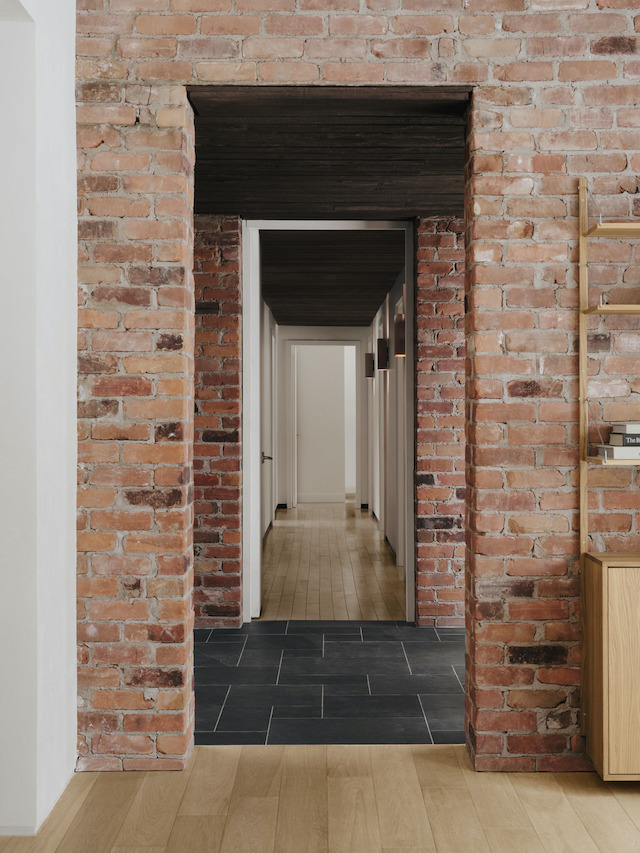
Described by the Vives St-Laurent team as characteristic of North American bungalows, this modern residence stands out with its interplay of volumes and clean lines. Comprised of three separate single-story volumes, connected by a glass corridor, the house is completely clad in brick, and the interior is deliberately pared back allowing the expressive nature of the materials to take centre stage. 


The main challenge for the design team was to achieve a significant transformation while preserving the architectural aesthetic established by the original architect. While the initial brief focused on renovating the living areas including the vestibule, kitchen, dining room, lounges, and powder room, various interventions were also carried out to improve comfort, such as opening up the kitchen to provide a view of the courtyard and maximise natural light.


Wanting a space that would reflect their timeless and unique identity, the clients requested that the Vives St-Laurent team spend a few days in the house to better understand its atmosphere, lighting, and functionality. Beginning in the vestibule, which connects the front and rear courtyards and serves as a transition between the day and night areas, the design pays careful attention to detail. The front door, with its oversized pivot-mounted structure and circular handle, stands out as a design element that echoes the style found in the kitchen cabinetry.


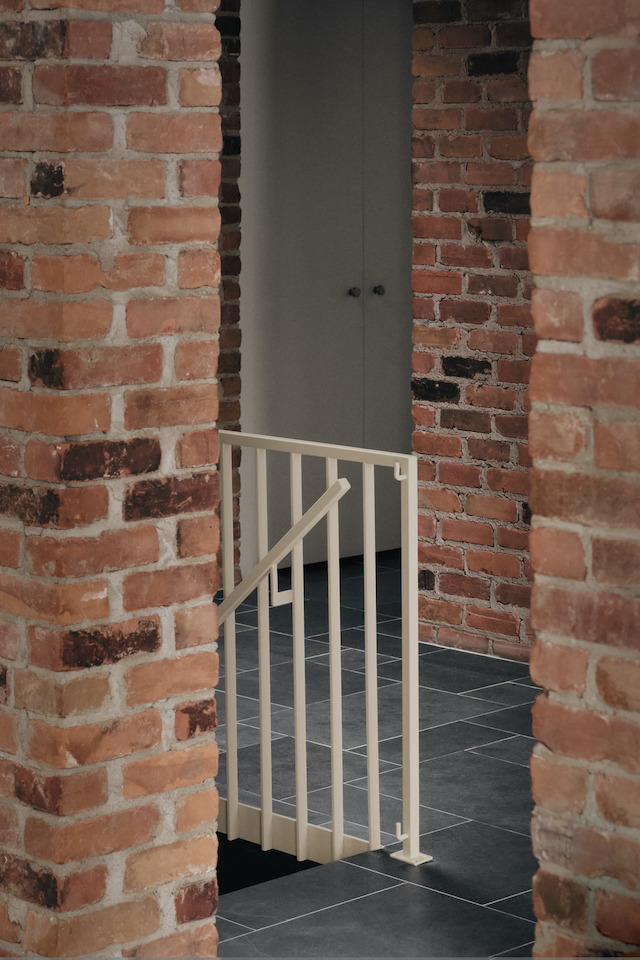
The natural and timeless texture of the slate flooring has been carefully restored to retain its original beauty. In addition, the staircase railing leading to the basement has been repainted in a light shade, seamlessly blending with the contemporary updates in other parts of the space. Further preservation of the skylight and the dark wood ceiling cladding pay homage to the original finishes and add to the overall character of the design.


From the vestibule, there are two openings leading to the main living areas. The first entrance reveals a cosy seating area and dining room, while the second access leads to a comfortable living room and an informal workspace. In the heart of the home, the kitchen features an elegant Taj Mahal stone island that serves as the focal point. With its sleek and cantilevered design, the monolithic counter makes a bold statement. The unpolished stone surface in brown and beige hues adds a distinctive charm that blends seamlessly with the carefully chosen materials, including the dark stained oak and lacquered cabinets.

The interior features a considered curation of furniture and lighting by Danish design brands Menu, Frama, Nor11 and &Tradtion, alongside locally sourced pieces from élément de base, GR Shop and A-N-D. 


Lime wash plaster in a custom neutral tone contrasts beautifully with the surrounding brick and infuses the main living areas with texture. The restoration process involved a meticulous collaboration between the client and the contractor to find the perfect mortar shade ensuring a coherent integration with the surrounding elements. Furthermore, the sanitary block, covered in dark oak, pays homage to the original wood-clad ceiling of the entrance, preserving the historical charm and adding a touch of sophistication.

Throughout the home, the use of natural oak flooring by Unik Parquet and a palette of soft beige tones create cohesion between different areas while striking the perfect balance between elegance and modernity.


Carefully tailored for a family of four, the renovation seamlessly preserves the home’s charm and mid-century style, while thoughtfully opened partitions elevate the living experience, creating a functional and harmonious environment.

Credits

Project manager: Léa Courtadon
Contractor: Habitations Renaud
Photography: Alex Lesage

VIEW STORY
Pin ThisShare on Tumblr
 

T.D.C© Theme by Blog Milk