Copyright The Design Chaser 2012. Powered by Blogger.

Search Bar

Social Media

Text Space

THE DESIGN CHASER

BROM by AtelierCarle Reframes Rural Architecture with Purpose and Permanence

7.14.2025

Set against the backdrop of Lac-Brome in Quebec’s Eastern Townships, BROM by AtelierCarle is a layered architectural response to questions of sustainability, cultural continuity, and place. Located on an estate that had been in the same family for nearly a century, the project moves beyond conventional preservation or aesthetic gestures. Instead, it engages in a deeper cultural reflection—one that considers the evolving rural landscape and what it means to contribute meaningfully to our shared built environment.


Led by AtelierCarle's founding architect Alain Carle and project manager Isaniel Lévesque, the project reflects a philosophical approach to architecture. Here, sustainability is not measured only in environmental terms, but also through the lens of memory, material permanence, and collective experience—grounding the new residence in both site and culture.


The original structure—a timber-framed residence from the early 20th century with rubble stone walls—had deteriorated beyond repair. While this necessitated a move away from the idea of total conservation, AtelierCarle chose not to erase its presence, but rather embed it into the new narrative. The masonry chimney and foundations were preserved, and as a result, entry to the new building involves passing through the remnants of the old one—a kind of architectural remembrance, a duty of memory—which defines the arrival at the property. The secondary buildings on the site have been preserved and incorporated into the overall landscape design. The property now consists of a series of three connected pavilions that draw on the rhythm of 19th-century rural structures, subtly referencing a form of territorial occupation that once defined the region.
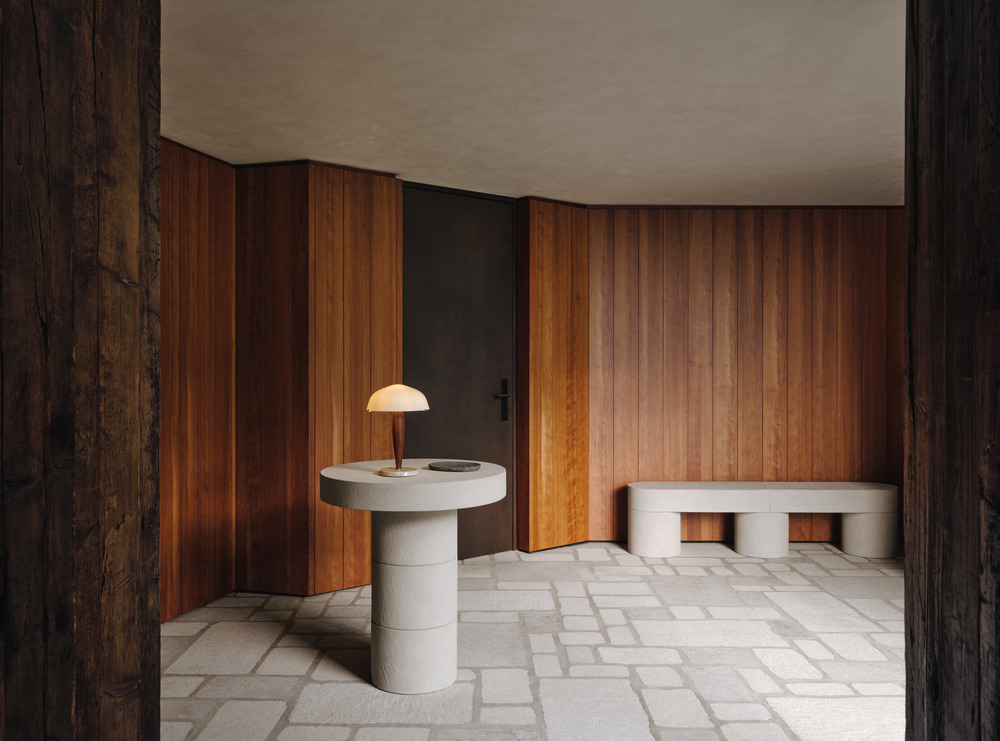


This new configuration, which conceptually establishes a dialogue between the new and the disappeared, highlights the enduring nature of stone in contrast to the more ephemeral character of wooden frameworks in rural architecture—a fragile material history that is often overlooked in the construction process.
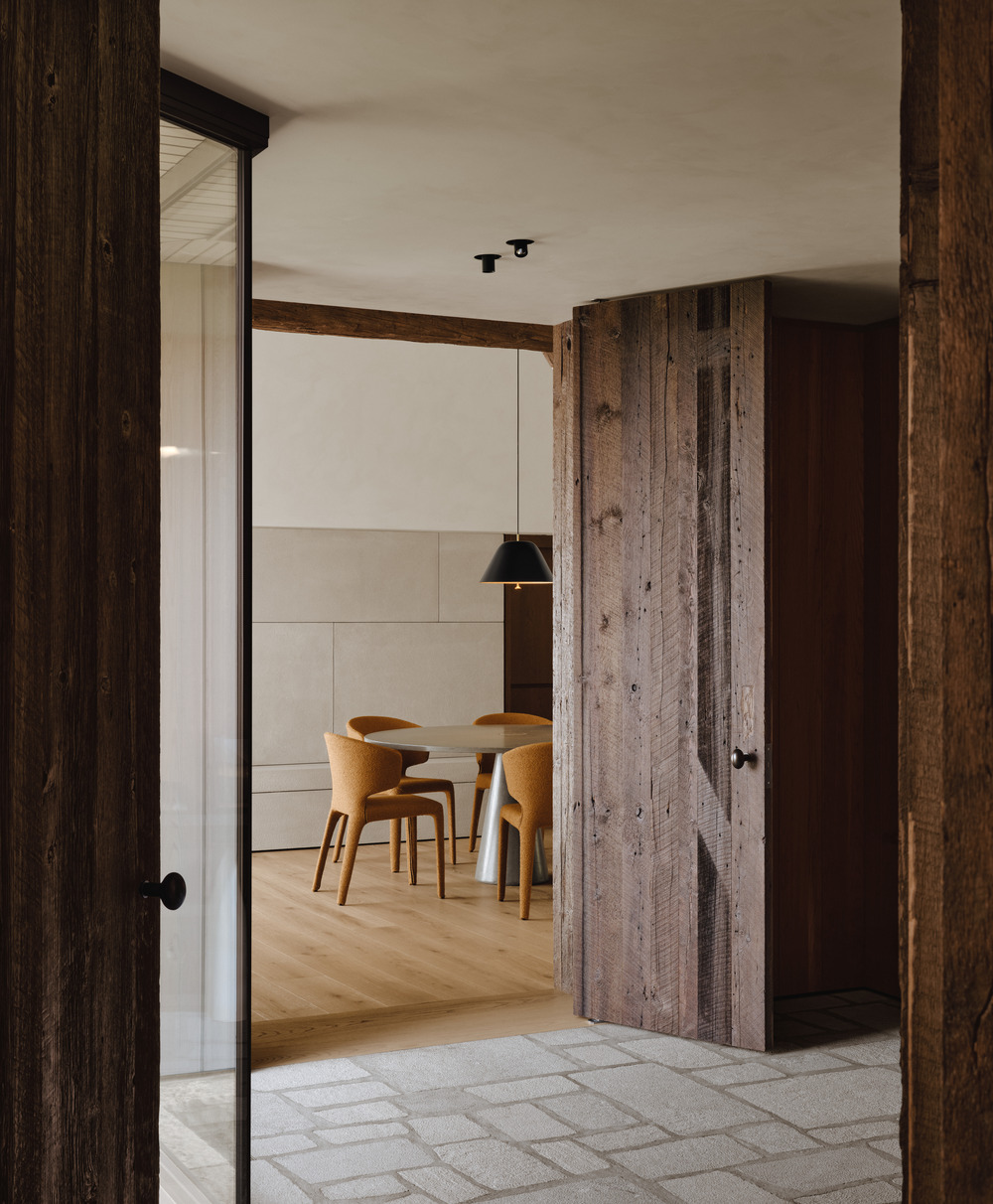


The siting of the home, influenced by the natural slope of the land, allowed for the creation of a basement level and full-height rooms below. The ground floor maintains a consistent relationship with the landscape, offering a seamless transition between indoors and out.


From the outset, the team approached the build as a cultural practice. Stone becomes the project’s throughline—grounding both the structure and its sensory experience. Two volumes housing the entrance halls are clad in stone, providing aesthetic and material continuity with the original structure. New retaining walls wrap around these core volumes, establishing the axes for the development of the three pavilions. The masonry continues inside, creating a natural progression into softer materials. Stone also functions as a thermal mass throughout the home, supported by a geothermal system.


The above-ground structure—a mix of metal frames, wood, and exposed beams made from reclaimed timber—is capped by soaring four-sloped cedar roofs, their steep angles referencing the surrounding monumental landscape of the Monteregian Hills. Rather than treating windows as decorative elements within a façade, AtelierCarle designed them to directly respond to the landscape, dissolving boundaries and drawing the outdoors into everyday experience.


Inside, the layout unfolds in a continuous sequence across the ground floor—a horizontal rhythm that echoes the surrounding lakeside landscape. Tall cathedral ceilings and generous volumes are punctuated by large doors crafted from reclaimed wood, offering moments of openness and intimacy. Overhead, reclaimed beams have been carefully adapted to meet the structural needs of the new build.


The interior materiality embraces simplicity, with an aesthetic that bridges old and new, past and present. A minimal palette of stone, timber, concrete, and low-emission finishes was chosen for both its durability and reduced environmental impact. These natural materials ground the spaces, reflecting the fragile yet enduring history of the site.

Just as the architectural approach blurs the boundaries between before and after, the interior atmosphere evokes a sense of suspended temporality—a feeling of permanence that unfolds from the inside out. The result is a home untethered to trends, anchored instead in place, memory, and material continuity.

Too often, projects of this kind are marked by overconsumption or the unnecessary dismantling of viable elements. Here, the design extends the lifecycle of what already exists—preserving what can be preserved, and reimagining what cannot.

Custom furniture by Élément bois adds a layer of timeless tactility, while lighting by Sistemalux and Lumenpulse defines each space with quiet precision.


Rooted in a deep sensitivity to time, place, and material, BROM creates an architectural language that feels both grounded and open—one that acknowledges the past while responding to the needs of contemporary rural life. Rather than imposing itself on the landscape, it becomes part of it, contributing meaningfully to the evolving story of rural life and the shared traditions that shape it.


Credits

Architecture & Interior Design: AtelierCarle
Landscape Architect: Oscar Hacche
Photography: Alex Lesage

VIEW STORY
Pin ThisShare on Tumblr

New and Noted

1.23.2025

While the TDC Blog has been quiet since the latter part of 2024, as I’ve been fully immersed in styling, design, and writing projects, January, as always, brings an exciting array of design news—and I can’t let the month slip away without sharing some inspiring new projects and products that have landed in my inbox.


&Tradition Opens a New Showroom in Villeneuve-lès-Avignons, France

Located in Villeneuve-lès-Avignons, in the southern region of France, the new &Tradition showroom is located within a former papal residence dating back to the 16th century. Embracing the history and heritage of the building, whose architectural characteristics reflect those seen throughout the medieval town that surrounds it, &Tradition have taken care to preserve and restore original features, establishing a considered setting in which to showcase their timeless collection.


Providing a comprehensive overview of &Tradition designs from a variety of international creatives, both contemporary and classic, the space offers a curated experience of &Tradition's collection of furniture, lighting and accessories. With an emphasis on classic designs and outdoor furniture, the collection on display has also been selected for its relevance to the local market.

&Tradition Avignon showroom
14 Place de l'Oratoire, 30400 Villeneuve-lès-Avignon, France


Coco Flip Launches new Lighting Collection, Dancer 

Dancer is a new collection of lighting designed by Coco Flip in collaboration with Melbourne-based ceramicist Belinda Wiltshire. Belinda’s refined artistry and bold use of black iron oxide led the design process towards a collection of striking and distinct pieces including table lamps, wall lights and ceiling mounts.

Dancer takes inspiration from the Rriadisches Ballet developed by Oskar Schlemmer, who was part of the Bauhaus design movement in 1920s Germany. The ballet used fantastical costumes and strong geometry to transform the dancers and emphasise their movements. Each dancer piece aims to echo a sense of movement through form and pattern, bringing a strong and character-filled aesthetic to an otherwise minimalist light.


Belinda works from her pottery studio in Preston where each piece is wheel-thrown, hand-finished and fired. Dancer is crafted using mid-fire clay and brushed with black iron oxide, providing a striking contrast against the warm brown clay. Each lamp is offered in three striped finishes—wide, thin, and spaced. Table lamps are available in any combination of these finishes.

Images 1-4: Styling by Jess Lilico / Photography by Tom Ross
Image 5: Styling by Marsha Golemac / Photography by Pier Carthew


Ground Collection by Norm Architects and Massimo Copenhagen

Inspired by the textures and colours found in the natural world, the new Ground collection by Norm Architects and Massimo Copenhagen seeks to evoke a profound sense of home and belonging—serving as a tribute to simplicity and tranquility, seamlessly merging understated beauty with exceptional craftsmanship. Drawing from these earthy tones and subtle hues reminiscent of diverse landscapes, the collection transforms interiors into inviting and harmonious sanctuaries, and with a focus on tactile comfort and enduring quality, the rugs are designed to anchor spaces in calmness and warmth, creating a sensory experience that resonates on every level.


The humble rug is designed to feel at home wherever it is placed. It doesn't demand attention but rather sits comfortably within the space, serving as a foundational element that ties everything together. Ultimately, the aim of the collection is to offer a design element that not only enhances the visual appeal of a room but also contributes to a sense of balance and harmony within the interior environment, where the presence of nature is palpable and fosters a deeper sense of connection and well-being.


Photography by Irina Boersma


Dinesen Country Home Has Been Reimagined By Copenhagen Design Duo Mentze Ottenstein

Dinesen, Denmark’s foremost manufacturer of high-end wooden flooring, and five-generation family company, has crafted high-quality wood solutions since 1896. Their former family house, Dinesen Country Home, is located near the company's manufacturing facilities in Jels, Denmark, and has been an integral part of the Dinesen legacy since 2004 when the family acquired the estate. Recently, the residence underwent a thoughtful renovation by Copenhagen-based architecture and design studio Mentze Ottenstein, signalling a new chapter in the history of the estate and its role in the company.


Built in 1885, the residence is a traditional southern Jutland longhouse with a thatched roof, nestled amid lush green forestry, meadows, and lakes. As a place steeped in the Dinesen family’s history, the home is a living testament to the values and craftsmanship that define the company and the family behind it. While the original framework carried out by Overby was still sound, Mentze Ottenstein reviewed all surfaces and material compositions, introducing a fresh take on colour and working thoroughly with detailing to create a more harmonious experience. The Garde Hvalsøe kitchen features handcrafted cabinets have been painted an eye-catching shade of green as a nod to its countryside location. Elsewhere, a series of hand-turned ceramic bowls from Georgia sit comfortably alongside new walnut and pear kitchen handles. Further colour can be seen in the aisles and small chambers on the first floor, painted in golden ochre, creating a warm and intimate experience.


Fittingly, wood still takes centre stage as the central material palette within the house. The architectural Pawson Furniture Collection by John Pawson for Dinesen in Douglas fir, released earlier this year, sits elegantly next to antique furniture and a series of bespoke new furniture pieces designed by Mentze Ottenstein. These pieces have been made of ash with an oil finish resembling amber and a grain pattern reminiscent of black elm. In addition, deeper-toned wood selections such as walnut and pear are represented, for instance, in frames by Cassetta, which offers a flattering contrast to the light Douglas floors.

The house is designed to evoke a sense of home rather than a showroom while showcasing the stories of numerous exciting collaborations throughout the years. Primarily reserved for Dinesen's friends, design clients and relations to enjoy its breathtaking surroundings and inviting interiors, the house may also later be available for public booking on select dates.

Photography by Monica Grue Steffensen

VIEW STORY
Pin ThisShare on Tumblr

Ashley Botten Design Crafts a Tailored Lake House Retreat

9.12.2024

Inspired by high fashion’s attention to detail and fine tailoring, Ashley Botten Design (abd) takes pride in collaborating closely with clients who share a similar reverence for meticulous craftsmanship. This shared vision is beautifully realised in the renovation of a family lake house in Muskoka, Ontario, where abd seamlessly blends refined elegance with the casual ease of spending summers near the water. Tasked with updating the six-bedroom cottage, the studio’s approach honours both the home’s natural surroundings and its architectural heritage, creating a harmonious retreat that exudes quiet sophistication.


While the exterior bones of the cottage have remained intact, abd reimagined the interiors by removing select structural walls, enhancing the flow between spaces and carving out quieter, more intimate areas. Core features, such as the classic sash windows and the majestic flagstone hearth—a hallmark of the Muskoka region—were preserved. The studio’s distinctive touch is evident throughout, with custom-designed furniture thoughtfully tailored to each room, offering a personalised expression of the home’s unique character.


Ashley Botten Design excels in creating experiential interiors that resonate on a sensory level, and this project was no exception. The studio’s modern sophistication shines through in their meticulous attention to detail and calming sense of balance and proportion—principles that echo their broader design philosophy.


Upon entering the cottage, guests are greeted by a striking curved sofa that draws the eye toward the stunning lake views. Designed to comfortably seat up to six, the sofa is rich in micro-detailing, such as seamlessly railroaded fabric that wraps around the back without visible seams. This careful craftsmanship creates a subtle yet powerful visual impact, allowing the sofa’s expansive contour to flow uninterrupted.

Nearby, a custom curved bench in white oak hugs the sofa, transforming previously unusable space into a functional area for a small sculpture or a seat to remove shoes. The area is anchored by a sculpted carpet with three-dimensional patterns that cast blush shadows, creating moments of quiet luxury.


On the ground level, a bold interplay of materials creates a sense of dynamism. Wide-plank Douglas fir flooring contrasts with the straight-grained larch that encases the half-turn staircase, leading up to a catwalk hallway. The kitchen cabinetry, also in larch, pairs beautifully with slabs of honed charcoal bedrock on the countertops, backsplash, and range hood. This rich palette is further enhanced with an open aluminum shelf for displaying dishware and an island kitchen surrounded by nubuck leather counter stools.


The primary bedroom and ensuite adopt a softer, more subdued tone, with walls painted in a textured sea salt hue and woven linen window coverings that diffuse dappled light. The bed frame, tightly upholstered in wool suiting, along with strategically placed millwork, offers an alternative passageway to the ensuite, enhancing the room’s functionality and flow.


Throughout the house, abd’s attention to sensory experiences elevates everyday living. In the ensuite, the studio designed an extended metal towel rack that doubles as a resting tray for burning incense, infusing the space with a serene ambiance. Privacy is thoughtfully considered with glass pocket doors in the bar lounge to buffer television noise, while an upholstered pod near the living room serves as a cosy nook for children.


Ashley Botten and her team at abd are known for their curated approach, where every detail is intentional and fits naturally within the dimensions of a room. From the selection of nuanced materials to the positioning of furniture, abd’s work reflects a deeply refined appreciation of quality and artistry. This family retreat, with its timeless style and careful attention to refinement, is designed to evolve beautifully with use and memories, becoming a layered and beloved home for generations.


Credits

Photography: Patrick Biller

VIEW STORY
Pin ThisShare on Tumblr
 

T.D.C© Theme by Blog Milk